

Red King Guava Plant
Choose Variant


Specification
Product Description
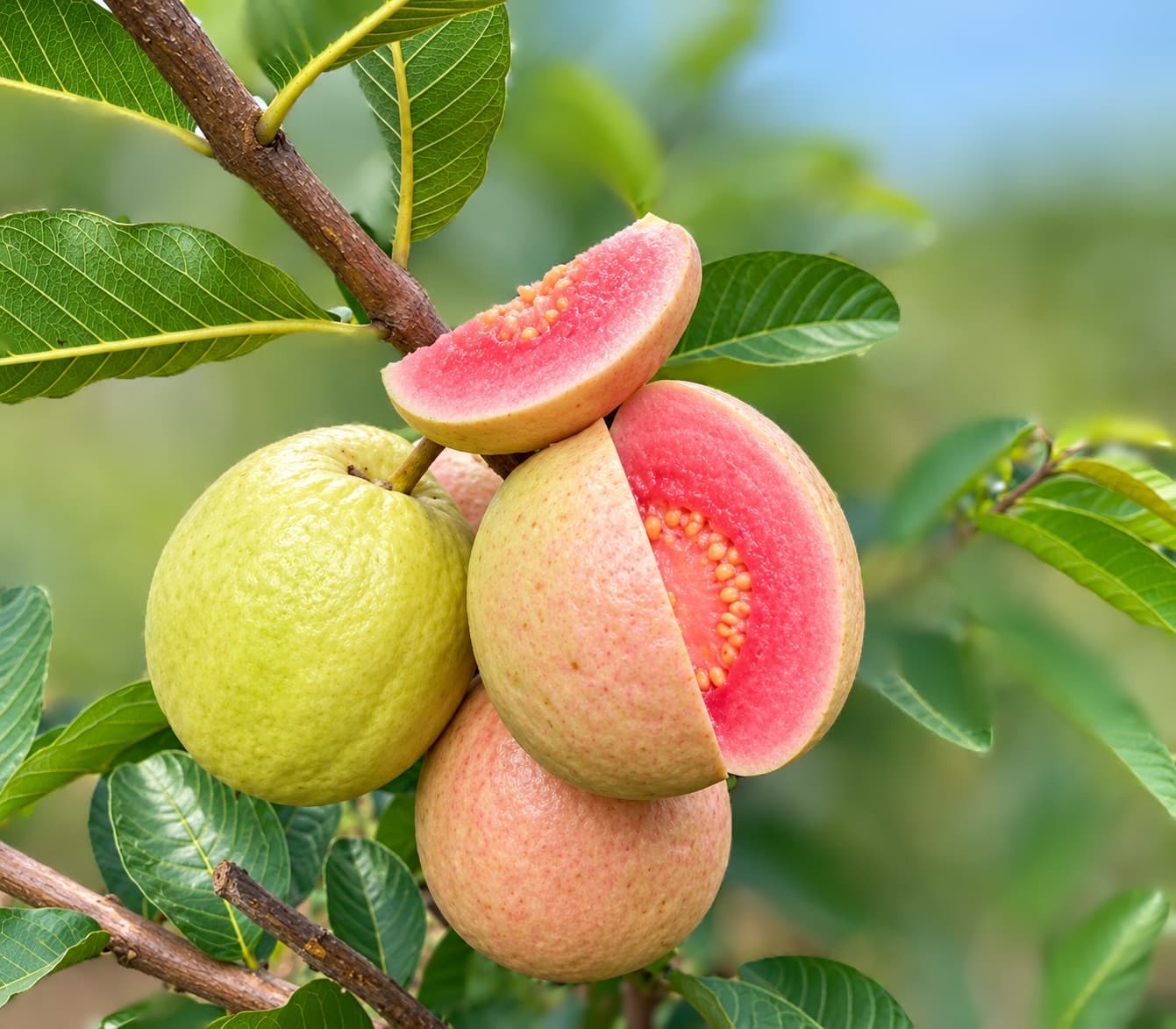
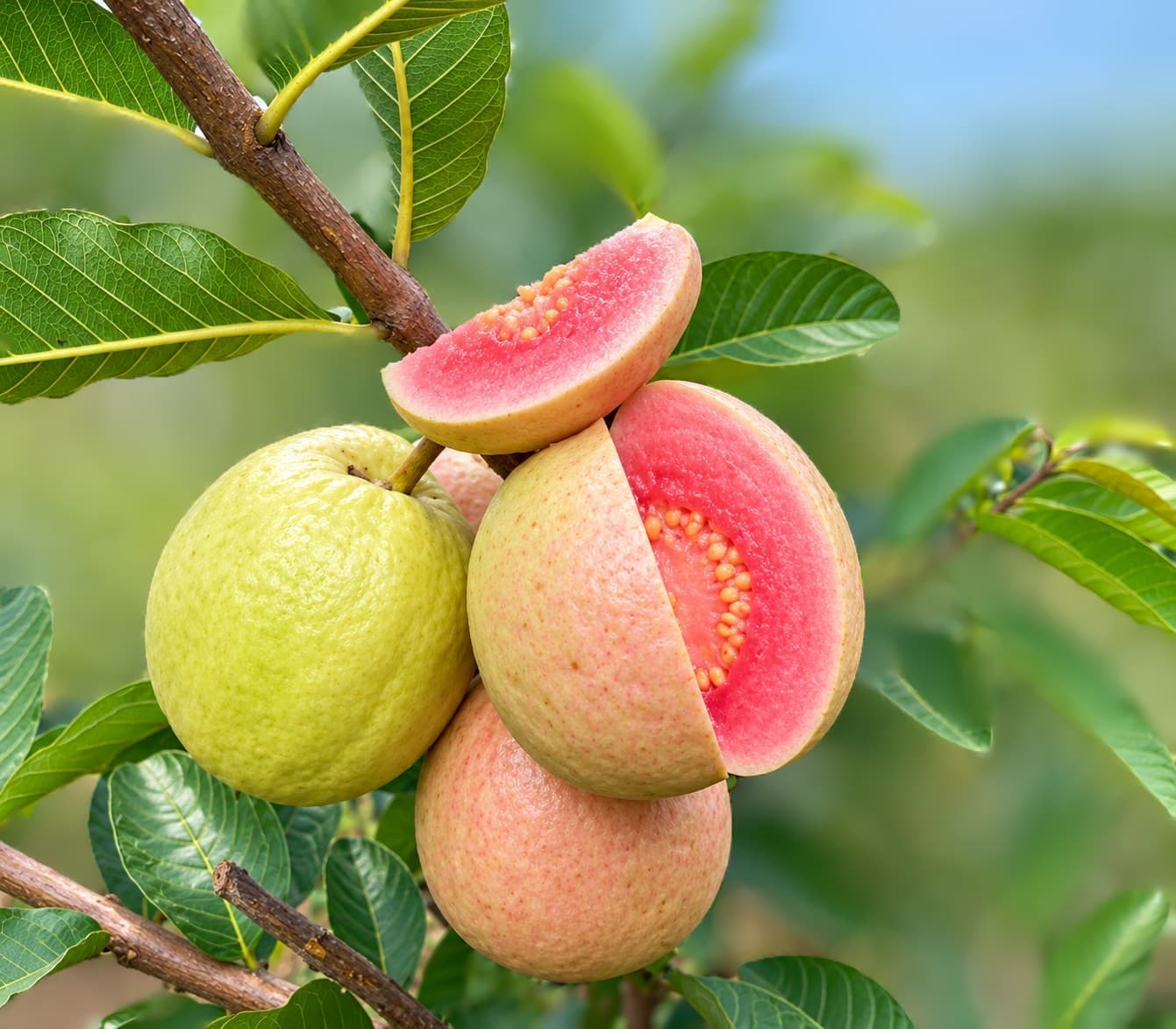
The Red King Guava is a premium, high-yielding hybrid fruit variety originally from Thailand, famous for its striking deep red-pink flesh and rich, floral sweetness.
FRUIT CHARACTERISTICS
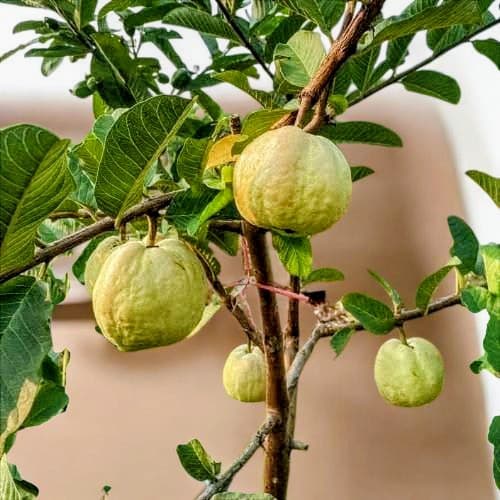
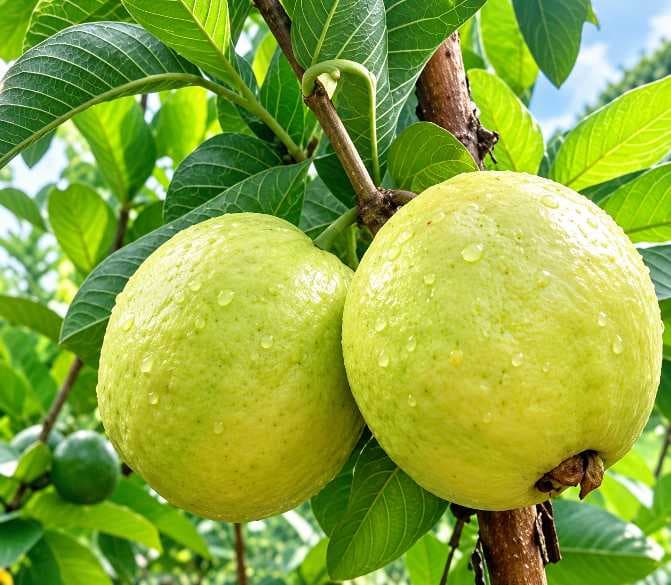
APPEARANCE: Round to pear-shaped with light green to yellowish skin when ripe, revealing a vibrant crimson-red interior pulp.
SIZE & WEIGHT: Extra-large jumbo fruits, typically weighing between 400g to 800g.
TASTE & TEXTURE: Crisp yet juicy texture with a sweet, aromatic flavor often compared to a blend of pear and strawberry.
SEEDS: Features significantly fewer and softer seeds compared to standard white or pink guavas.
SWEETNESS: Measures around 10–12° Brix on the sugar-content scale.
NUTRITIONAL PROFILE
Packed with high levels of Vitamin C, dietary fiber, and antioxidants.
Rich in lycopene, the natural pigment responsible for its deep red pulp and various health benefits.
CULTIVATION & GROWING
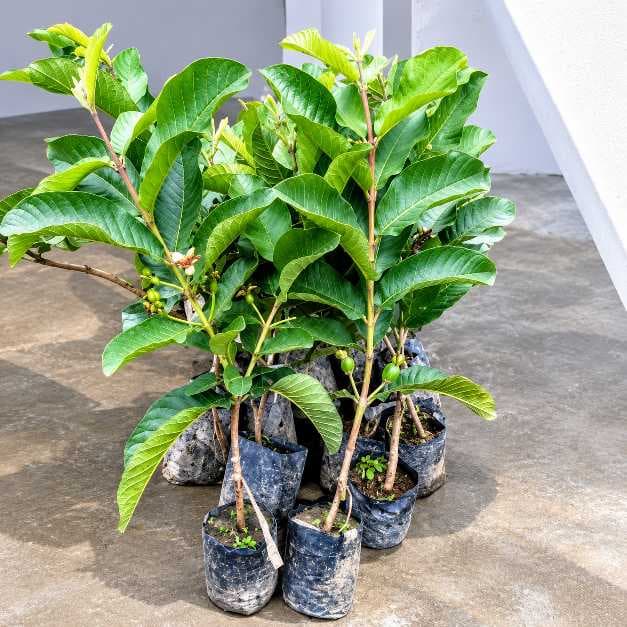
PLANT TYPE: Compact, vigorous, and fast-growing dwarf tree that can be successfully grown in open ground, large containers, or 16 to 24-inch terrace pots.
FRUITING TIMELINE: Grafted or air-layered saplings begin bearing fruit within 6 to 12 months, much faster than seed-grown trees.
CLIMATE & SOIL: Thrives in tropical and subtropical warmth (20°C to 32°C) with full sunlight and well-draining sandy loam or loamy soil.
CARE: Requires regular watering during flowering and fruiting stages, alongside light pruning after harvest to maintain shape and encourage new branches.