
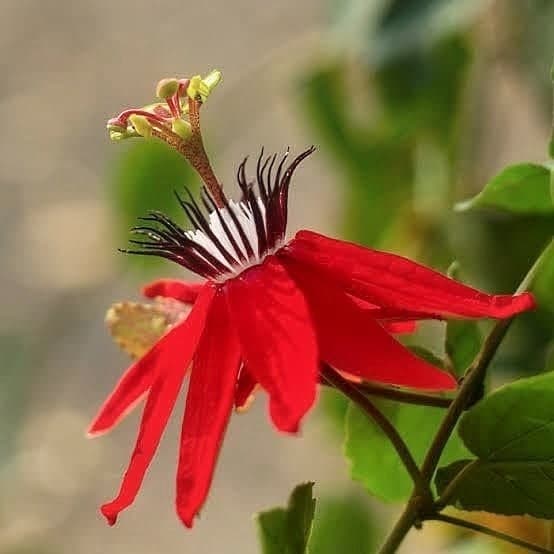
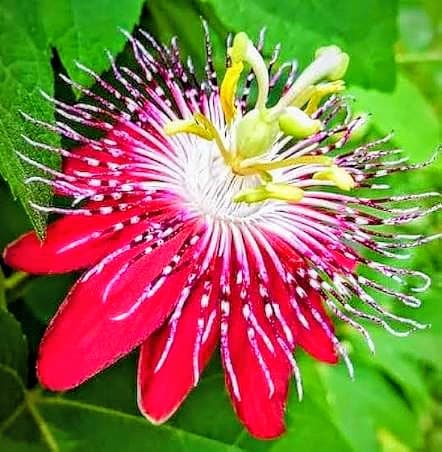
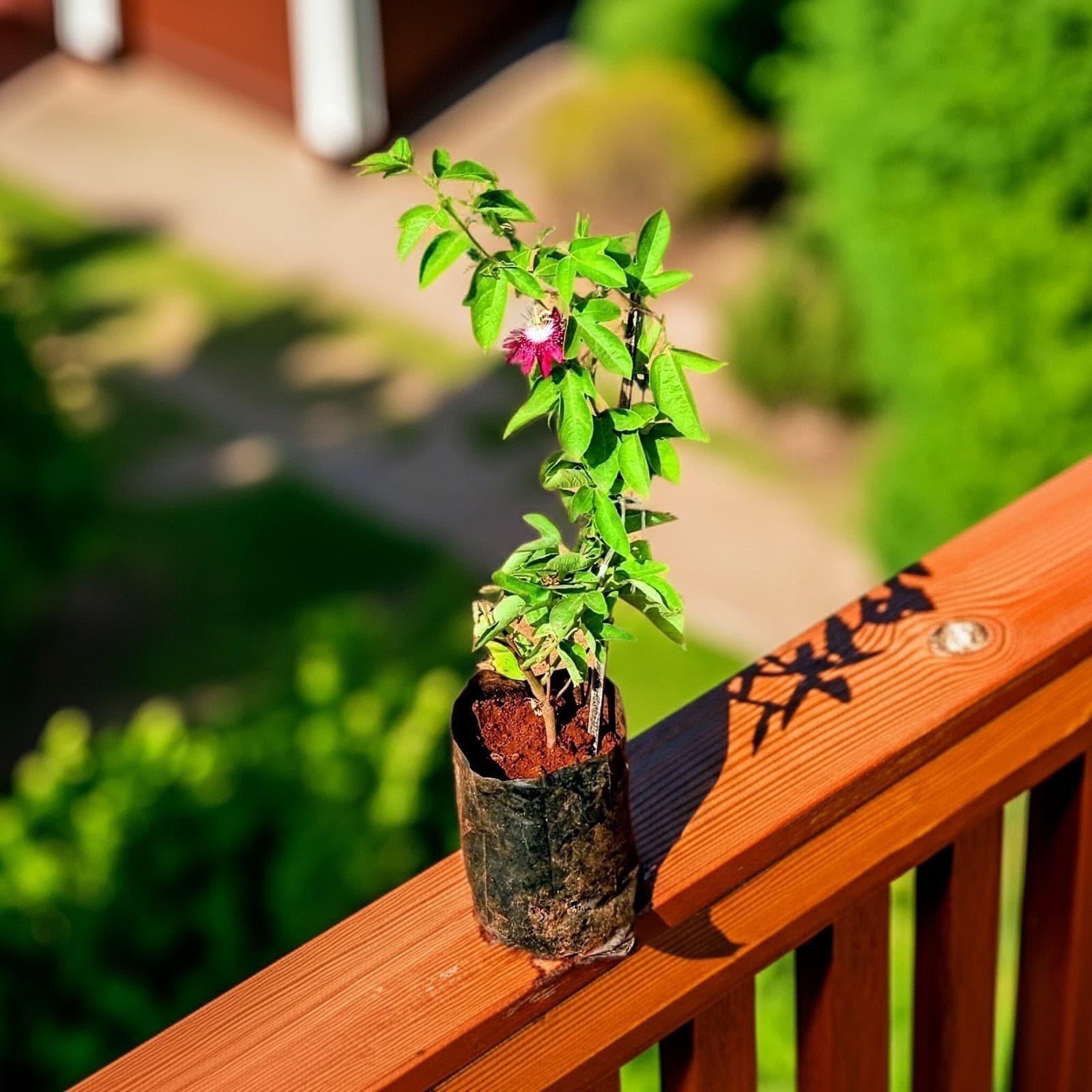

Rakhi Flower Plant (Red)
Choose Variant


Specification
Product Description
The Rakhi flower plant, scientifically known as Passiflora (commonly called Krishna Kamal or Passion Flower), is a fast-growing, exotic climbing vine famous for its unique, intricate blossoms that resemble a traditional Rakhi thread or a sacred chakra.
QUICK FACTS
BOTANICAL NAME: Passiflora (e.g., Passiflora caerulea, Passiflora incarnata).
COMMON NAMES: Rakhi Bel, Krishna Kamal, Passion Flower.
PLANT TYPE: Perennial climbing vine.
COLORS AVAILABLE: Blue, purple, maroon, red, pink, and white.
GROWTH HEIGHT: Climbs 10 to 20 feet with proper support.
FLOWERING SEASON: Spring through summer, often lasting into early winter in warm climates.
SPIRITUAL AND CULTURAL SIGNIFICANCE
HINDUISM: Popularly called Krishna Kamal because the central structure is believed to resemble Lord Krishna’s Sudarshan Chakra, with surrounding filaments representing a lotus or divine shield.
MAHABHARATA SYMBOLISM: The flower parts are traditionally linked to the Mahabharata—the central green structure represents Draupadi, the 5 outer petals represent the 5 Pandavas, and the numerous inner filaments represent the 100 Kauravas.
VASTU: Planted near home entrances or south/east-facing walls to attract positive energy and drive away negative vibes.
CARE AND GROWING GUIDE
SUNLIGHT: Requires 4 to 6 hours of direct sunlight daily for healthy growth and abundant blooms.
SOIL: Needs loose, fertile, and well-draining soil. A mix of 50% garden soil, 40% organic compost or vermicompost, and 10% sand or cocopeat works best.
WATERING: Water moderately when the top inch of soil feels dry. Avoid waterlogging, which can rot the roots.
SUPPORT: As a vigorous climber, it needs a trellis, fence, balcony railing, or a sturdy net/wire to climb on.
FERTILIZER: Feed with an organic liquid fertilizer or compost once every 3 to 4 weeks during the active spring and summer growing seasons.