
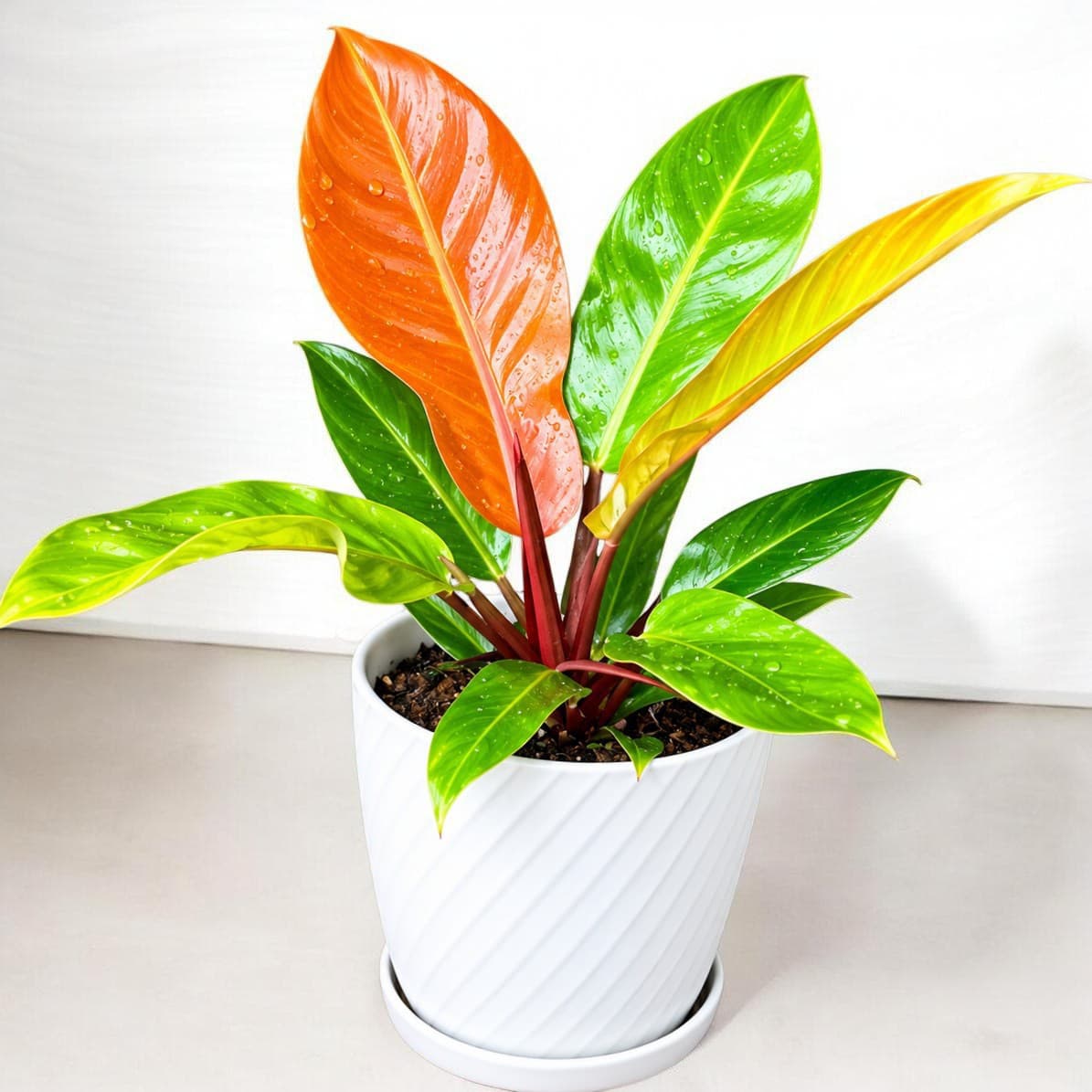
Philodendron Orange Princess
Choose Variant


Specification
Product Description
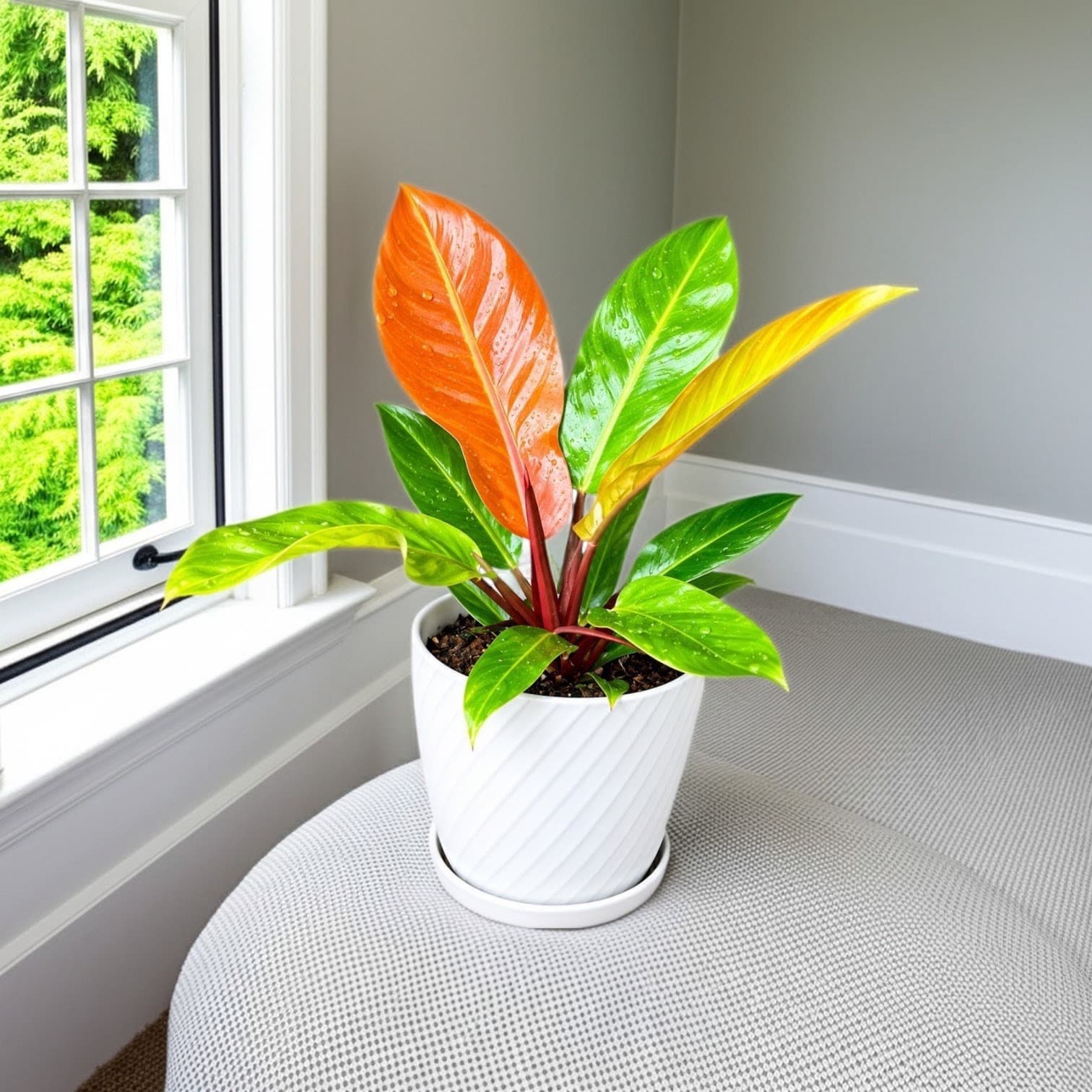
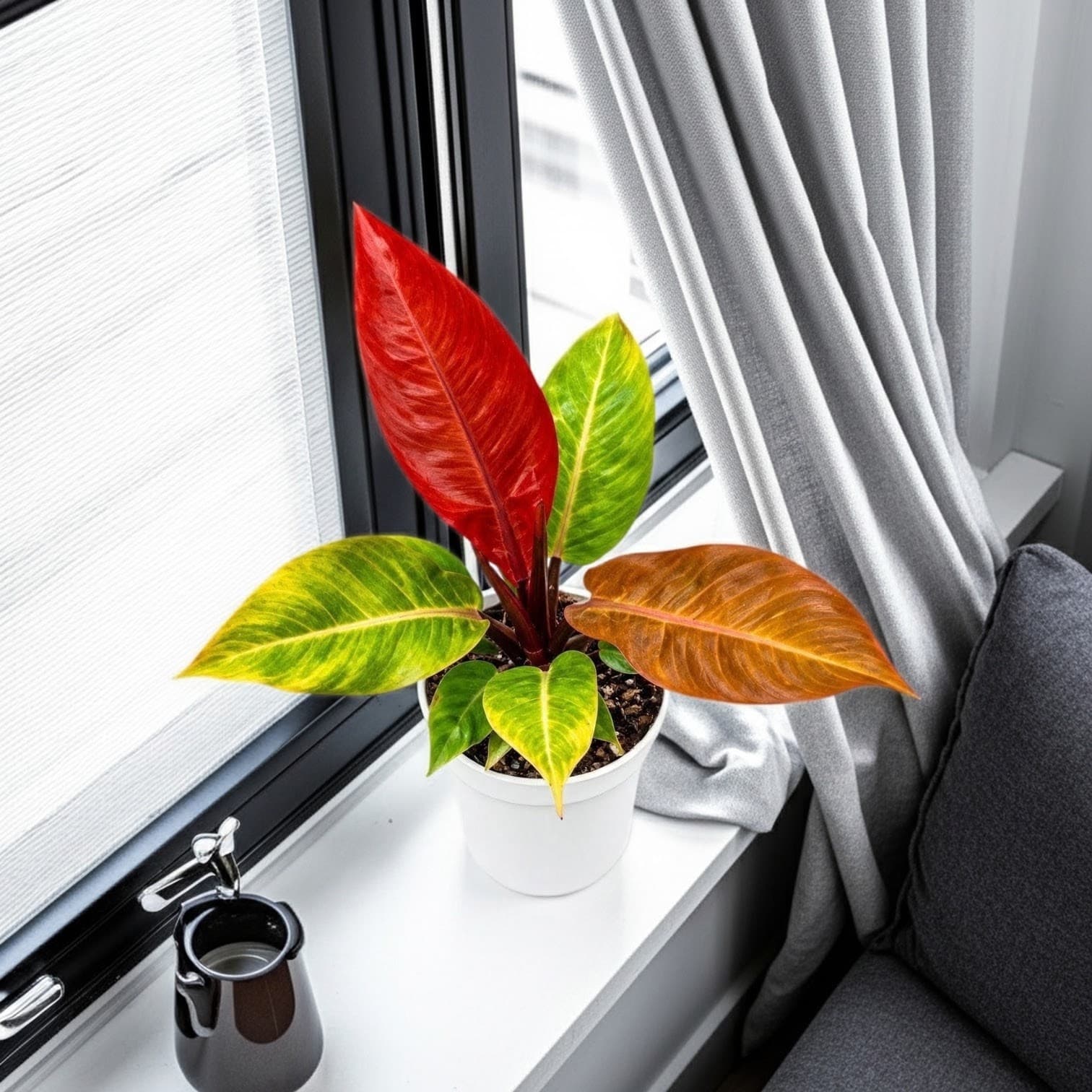
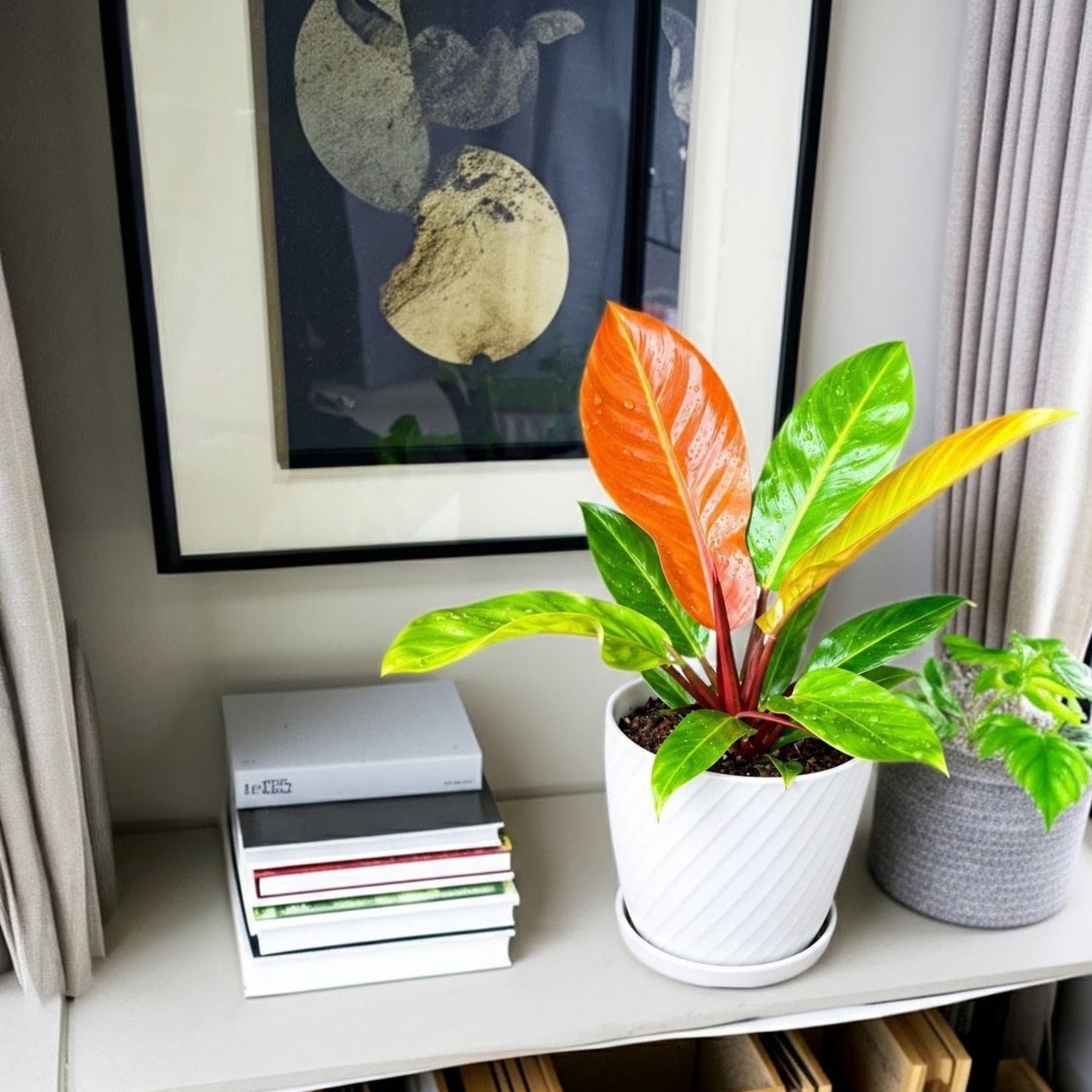
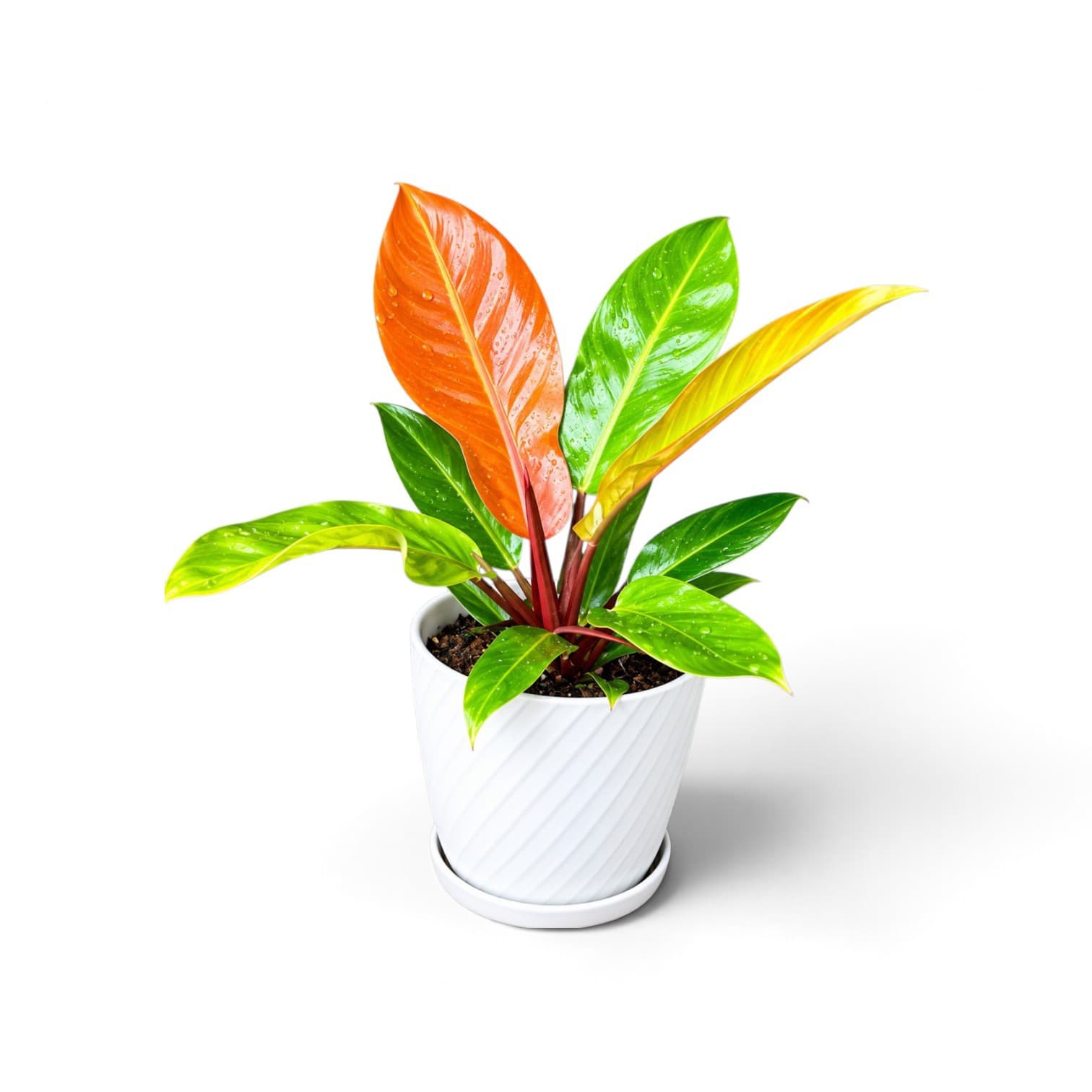
The Philodendron 'Orange Princess' is a rare and highly sought-after collector plant prized for its stunning, high-contrast variegated foliage. A member of the Philodendron erubescens group, it stands out because its new leaves emerge in brilliant shades of copper, peach, and fiery orange before gradually maturing into deep emerald or bronze-green. Unlike the standard solid-colored 'Prince of Orange', the 'Orange Princess' is heavily variegated with unpredictable patches, speckles, and marbling of cream, mint, and white—ensuring that no two leaves look exactly alike.
PLANT OVERVIEW & GROWTH HABIT
APPEARANCE: Striking variegated foliage featuring a mix of bright orange, copper, deep green, and cream/mint splashes.
GROWTH TYPE: Depending on the exact cultivation line, it is often grown as a compact, self-heading hybrid, though micropropagated tissue culture varieties readily display a vining, climbing habit that will mature beautifully when trained up a moss pole.
RARITY: It is considered a rare collector's aroid, often propagated via advanced lab micropropagation (tissue culture) to guarantee vigorous root systems and healthy growth.
CARE REQUIREMENTS
LIGHT: Bright, indirect sunlight is critical. Too little light will cause the plant to lose its vibrant fiery hues and revert to a solid, dull green. Avoid harsh, direct afternoon sun, which can easily burn the delicate, variegated portions of the leaves.
WATERING: Allow the top 2 to 3 inches (or top half) of the soil to dry out completely before watering again. Thoroughly drench the soil but ensure it drains perfectly. These plants are vulnerable to root rot and handle slight dryness far better than soggy conditions.
SOIL MIX: Use a light, airy, and highly chunkier aroid potting mix containing ingredients like orchid bark, perlite, and peat to ensure optimal drainage.
TEMPERATURE & HUMIDITY: Thrives in standard warm household temperatures between 18°C and 28°C. It prefers a high humidity environment (60% or higher is ideal). Low humidity won't kill it, but it can result in dry, crunchy, or yellow leaf edges.
FEEDING: Feed with a balanced houseplant fertilizer diluted to half-strength every two weeks during the active spring and summer growing seasons.
TOXICITY WARNING
Like most aroids, the Philodendron Orange Princess contains insoluble calcium oxalate crystals. It is moderately toxic to both humans and pets if ingested, causing oral irritation and swelling, so keep it safely out of reach of curious cats and dogs.