
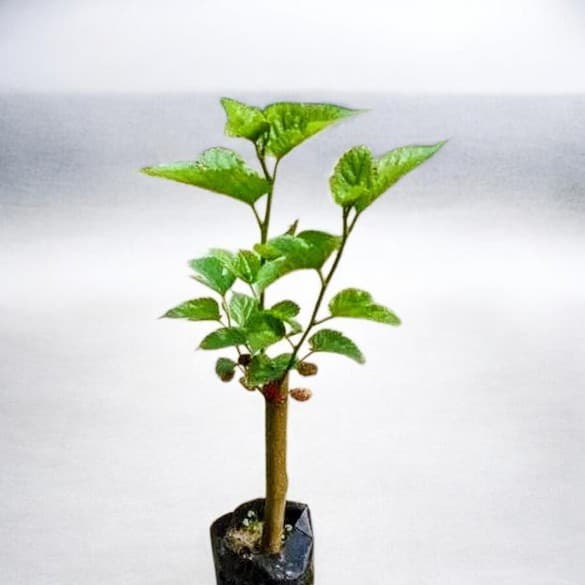

Mulberry Plant
Choose Variant


Specification
Product Description
A mulberry tree belongs to the genus Morus in the family Moraceae and is a fast-growing, deciduous tree known for its sweet, edible fruit and value in silk production.
KEY SPECIES
WHITE MULBERRY (Morus alba): Native to Asia; its leaves are the primary food source for domesticated silkworms (Bombyx mori). The fruit can be white, pink, or dark purple.
BLACK MULBERRY (Morus nigra): Native to southwestern Asia, prized for its large, juicy, dark purple-black fruit with a rich, tart-sweet flavor.
RED MULBERRY (Morus rubra): Native to eastern North America, growing the largest among the three and bearing dark purple fruit.
PHYSICAL FEATURES
HEIGHT: Typically ranges from 10 to 20 meters (33 to 65 feet).
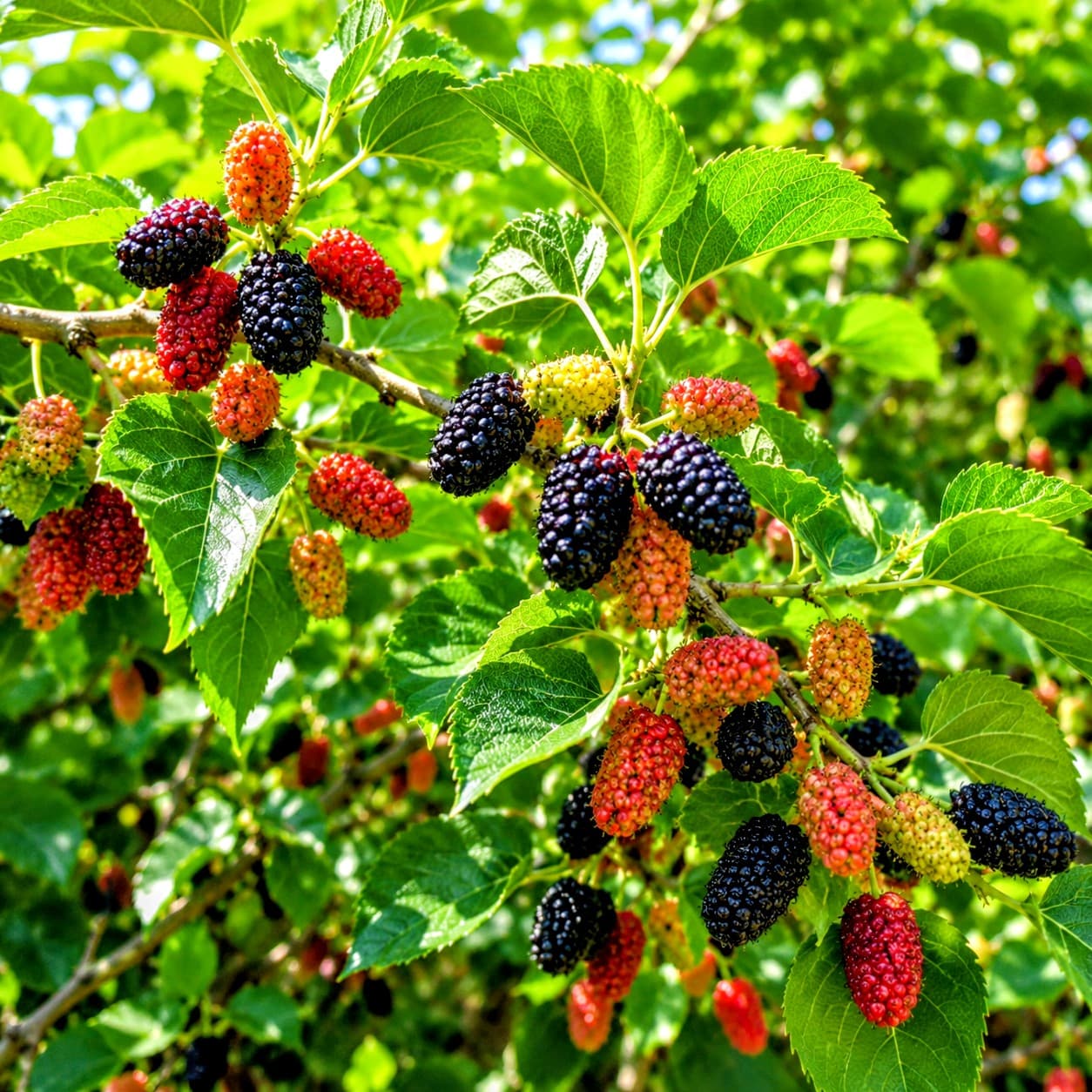
LEAVES: Alternate, simple, and often toothed or lobed (especially on younger shoots).
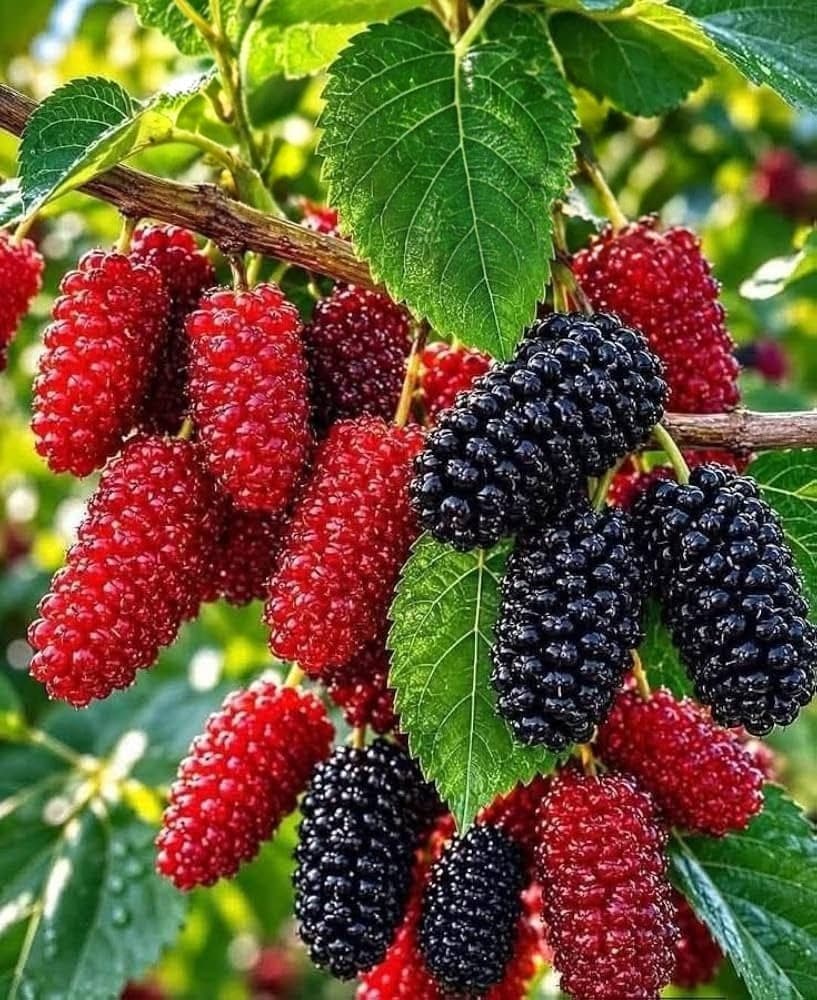
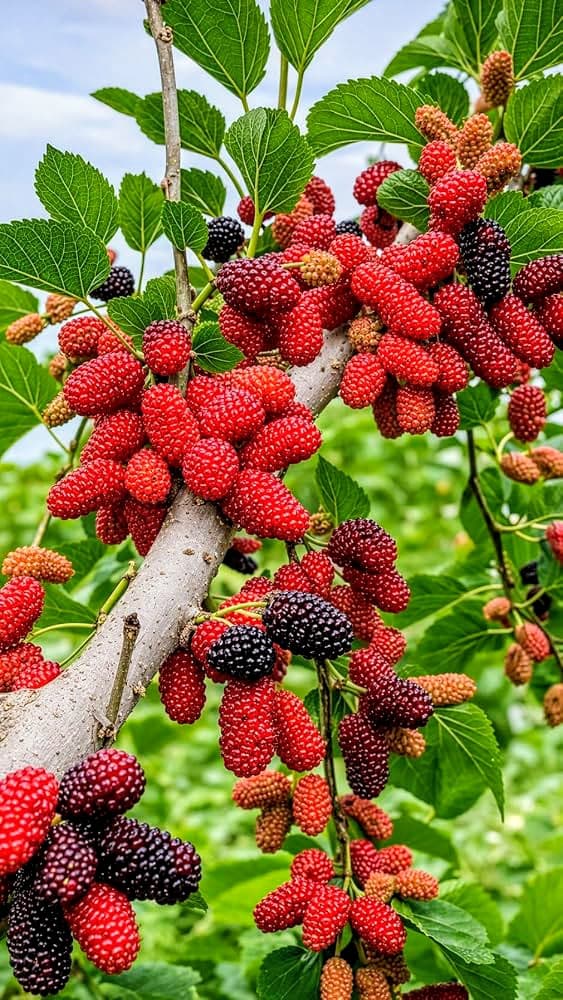
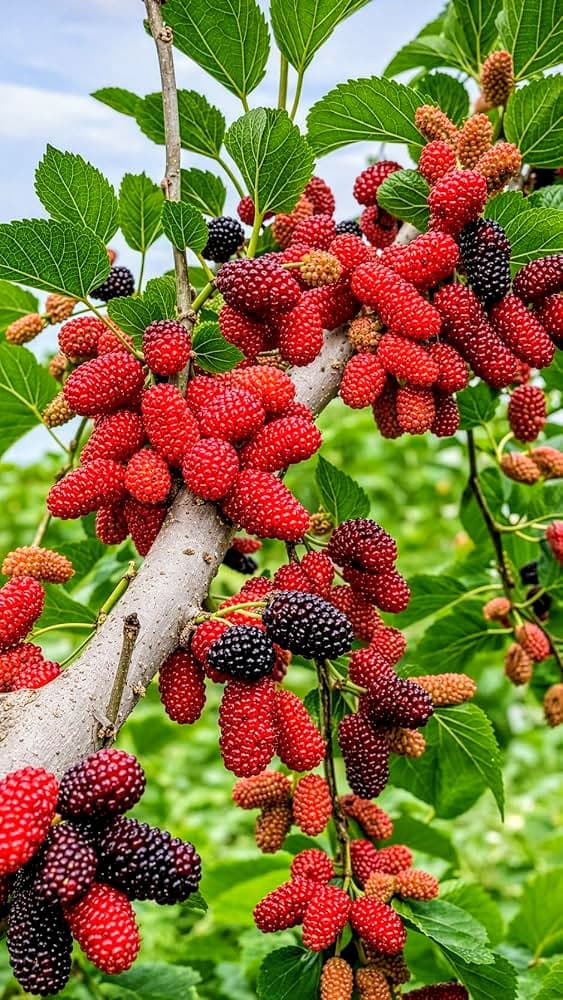
FRUIT: Resembles a blackberry, turning from green to red, pink, white, or deep purple/black as it ripens in late spring to summer.
REPRODUCTION: Trees can be monoecious (male and female flowers on the same tree) or dioecious (separate male and female trees).
COMMON USES
FRUIT: Eaten fresh, dried, or used in jams, syrups, wines, and teas.
SERICULTURE: Cultivated extensively to feed silkworms for raw silk manufacturing.
LANDSCAPING: Used as shade or ornamental lawn trees (such as weeping varieties).
TRADITIONAL MEDICINE: Leaves and extracts are studied for potential blood sugar and cholesterol benefits.